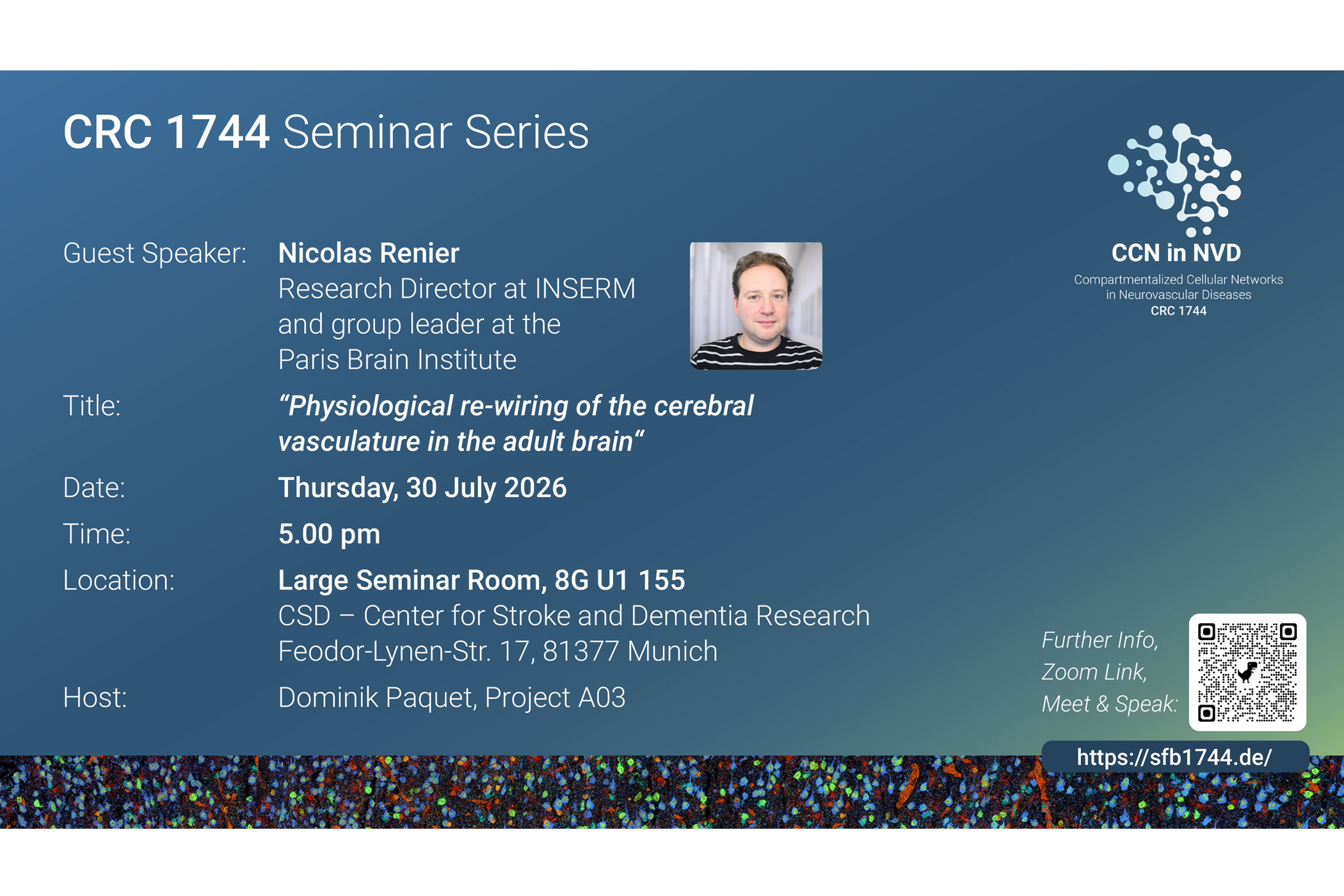
Nicolas Renier explored a fundamental question in vascular neuroscience: does controlled angiogenesis occur in the healthy adult brain? Using pregnancy as a physiological model of brain plasticity, he presented evidence that the cerebral vasculature remains remarkably dynamic throughout adult life. Rather than representing a pathological response, pregnancy induces a coordinated and reversible expansion of the cortical vascular network, driven by increased estradiol levels, VEGF-A signalling and the transient activation of endothelial tip cells.
His work highlights how these vascular adaptations accompany changes in neuronal circuits and maternal behaviour, demonstrating that vascular remodelling is an integral component of physiological brain plasticity. The seminar also addressed how these adaptive mechanisms are disrupted under pathological conditions. In mouse models of obesity, high-fat diet altered vascular organisation and blood flow dynamics, suggesting that metabolic disease impairs the brain's ability to remodel its vasculature appropriately.
The seminar stimulated an engaging discussion on the remarkable plasticity of the adult cerebral vasculature and its implications for understanding neurovascular function in both health and disease.