The Challenge
Most current human brain models either lack mature microglia altogether or lose them after only a short period in culture. As a result, researchers have been unable to investigate long-term neuron glia interactions or faithfully reproduce inflammatory processes that play central roles in diseases such as Alzheimer's disease. Existing organoid systems also frequently develop necrotic cores and do not fully mimic the brain's extracellular environment, limiting physiological maturation.
A New Generation of Human Brain Tissue Models
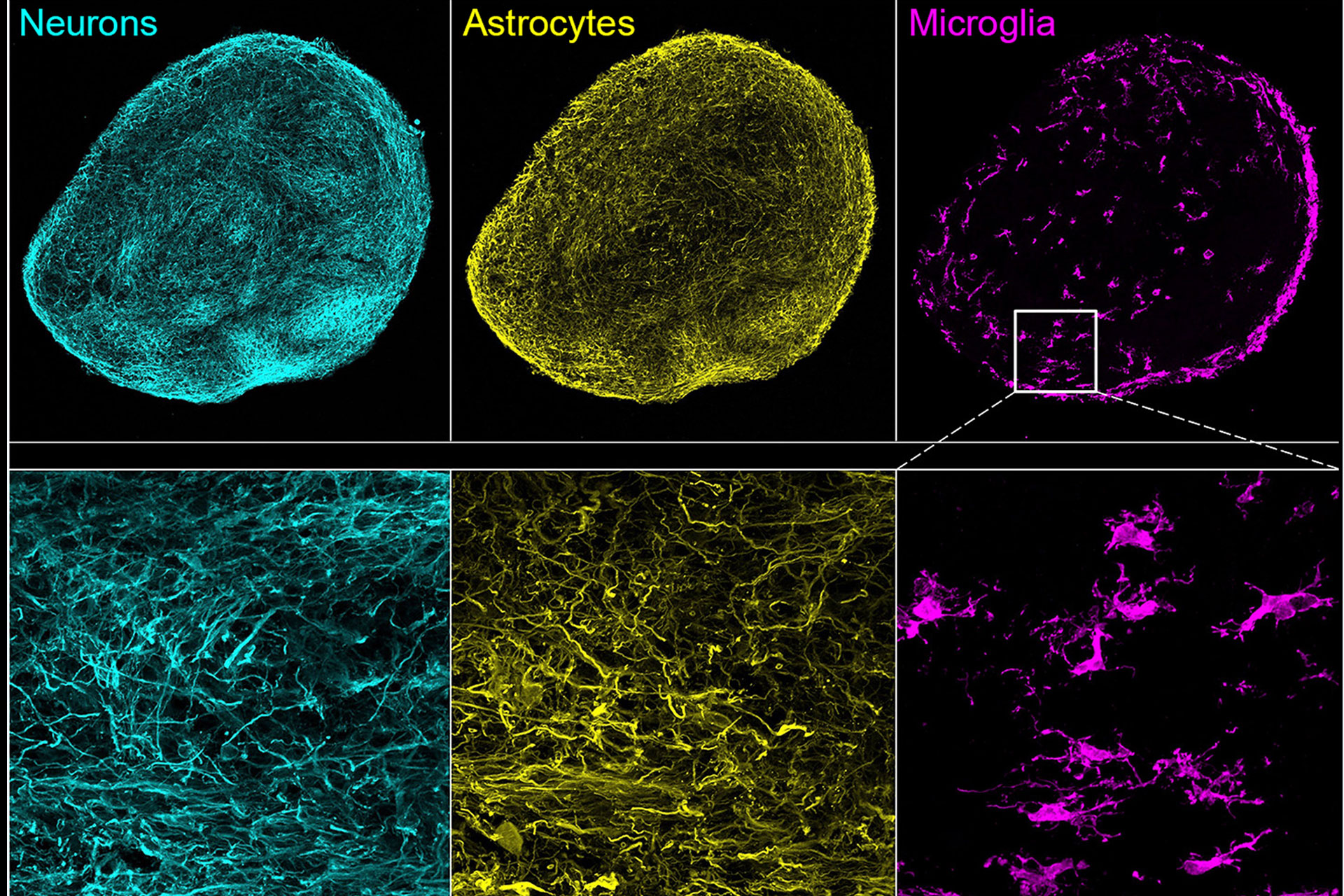
The team generated a three-dimensional brain tissue model (3BTM) from human induced pluripotent stem cells containing neurons, astrocytes and microglia. Rather than allowing stem cells to self-organize into organoids, each cell type was first differentiated separately and then assembled under controlled conditions. This approach produced highly reproducible tissues that remained viable for more than six months while maintaining mature neuronal networks, functional astrocytes and long-lived microglia.
Importantly, the incorporated microglia developed the ramified morphology, gene-expression profile and rapid injury response characteristic of their counterparts in the human brain. They continuously surveyed their surroundings, responded to tissue damage within minutes and retained key homeostatic markers that have been difficult to achieve in previous in vitro systems.
Modelling Alzheimer's Disease – and Its Treatment
To demonstrate the model's potential, the researchers introduced Alzheimer's disease-associated mutations into the tissue. The resulting brain models reproduced several hallmark features of the disease, including amyloid-β plaque deposition, increased phosphorylated tau and pronounced neuroinflammatory responses. Microglia adopted disease-associated transcriptional states similar to those observed in human Alzheimer's brains.
The team then tested anti-amyloid immunotherapy directly in the model. Treatment successfully cleared amyloid deposits and substantially reversed disease-associated molecular signatures in glial cells, illustrating how the platform can be used to investigate therapeutic mechanisms in a human-relevant setting.
Why This Matters
This work represents an important step towards more physiologically relevant models of the human brain. By combining reproducibility with long-term maintenance of mature neurons, astrocytes and microglia, the new platform enables researchers to investigate how brain cells communicate during health and disease and provides a valuable system for testing future therapeutic strategies before moving into animal models or clinical studies.
Relevance for CRC 1744
Understanding how different brain cell types interact to drive neurodegeneration is a central goal of CRC 1744. The new 3BTM platform provides an experimentally accessible human model that captures critical aspects of neuron glia communication and neuroinflammation, creating new opportunities to investigate disease mechanisms and evaluate therapeutic interventions in a controlled, human-specific setting. The study was led by CRC 1744 investigator Dominik Paquet, whose expertise in stem-cell models and microglial biology contributed to the development of this innovative experimental platform.